Category Archives: UK

Not an ordinary day

March 11th has rolled around again. Until just a couple of years ago it was just another day towards the end of the school year, and we haven’t yet planted the date so firmly in our calendars that we see it coming from weeks away. It’s easy to be caught unawares when planning other things. Last month I was trying to schedule something at school with a friend and we decided that March 11th would be the best date, started to write it into our diaries and then stopped. March 11th. It’s not an ordinary day.

March 11th 2011. At 2:46pm a magnitude 9 earthquake hit off the coast of Tohoku, the northeastern part of Honshu. (The six prefectures are Akita, Aomori, Yamagata, Iwate, Miyagi and Fukushima, the latter three are the ones most badly affected.) In Tokyo, over 300 kilometres away, it felt very big and very long. The tsunami triggered by the quake caused devastation on a scale that even now is difficult to understand. What followed in the hours, days and weeks afterwards shook the Tohuku region and the whole of Japan and gave us a new normal.

I remember someone asking me in the days following the earthquake, ‘Is this the biggest thing you’ve ever experienced?’ and for many of us it was. Even now, it’s hard to find the words to explain this feeling. I wrote often and at length over the weeks and months that followed, and archived all of what I wrote when I started this blog. When I look back over those original e-mails I find myself back there, in that mix of anxiety and determination; anxiety about what was going to happen, and determination to stay, to keep faith with the people of Japan and hoping and praying, day after day, that it was all going to be all right.

For people outside the Tohoku region it has been. Western Japan was of course affected because the whole country was worried about what was happening, but in terms of everyday life they were not, and a lot of people in Kanto went to Kansai when they felt a need to get further away from Fukushima. In Kanto we were of course closer to Tohoku and specifically Fukushima; we felt the aftershocks and were more directly affected by the unfolding situation. But really, by Golden Week (the block of national holidays at the end of April and beginning of May) life was back to normal.

For the people of Tohoku it has not been. According to figures in the newspaper this morning, 700,000 people in Iwate, Miyagi and Fukushima lost their jobs or took leave after the earthquake, and this was 27.8% of the total workforce. The majority of those took leave but in the time since then many have changed jobs and been affected by lower pay. Looking at other figures in the same newspaper, it’s shocking how much has not been done, and even those figures present a picture more positive than the reality, according to local officials. Least progress has been made in what is referred to as ‘town reconstruction’; while all debris has been cleared away from the towns and villages, it has not been disposed of yet. What seems to me to be the most pressing need, for new housing for people who lost their homes, was the worst of all; 20,600 houses are planned, land for only 7,405 has been secured. No mention of how many have actually been built. Two years on, many people are still living in temporary housing.

On Sunday I saw a headline which read, ‘¥1.4 trillion to be carried over in quake-hit areas: most unused funds related to reconstruction’. Apparently this is caused mainly by a shortage of manpower and materials, but really, Japan is in a recession, unemployment is high (for Japan) and people need homes and infrastructure. Just get on with it. Make it happen. Communities have been decimated, as people of working age have moved away to find employment and a safer place to raise their children, leaving behind the elderly. I heard about a school in the affected area from one of the students at school, after she returned from doing some volunteer work there. Of 104 students before March 11th 2011, only six remain.

When I think about the earthquake and all the horror that followed, my memories are contrasting ones; of the facts and figures, of trying to make sense of all the information, but also of how everyone got through it together. We walked softly, we spoke gently, we all kept a lid on what we were feeling. I remember sitting on buses and trains and feeling the air crackling with emotion, but everyone staying outwardly calm. I remember going cherry blossom viewing in Yoyogi Park and feeling so glad to be outside, in the sunny weather, with thousands of other people. Most of all, I feel proud of just being here, witnessing this great country coping with something unimaginably awful. Yes, there were things done badly; TEPCO officials ran circles round the government and only months later did we hear that there had indeed been a meltdown and a partial meltdown at two of the reactors at Fukushima Dai-ichi. But ordinary Japanese people were amazing, and it was a privilege to be here, the scariest and most inspiring time of my life.

Here are the numbers: 15,881 dead, 2,668 missing, 315,196 homeless. Behind every single one, a life lost or changed forever. What does that look like? This photograph was on the front page of the newspaper this morning:

3:11This afternoon I attended a memorial service at St. Andrew’s Cathedral. We prayed in silence from just after 2:30 until 2:46. It felt right to be there, in the same place I was last year, with other members of the diocese, silently remembering. It has taken me a long time to write this, the words didn’t come easily. Because really, there are no words. There is a deep sadness that drags you back down into those dark days, a reminder that for the people of Tohoku they still live with the aftermath, today and every day, but with that there is also love, pride and ultimately speechless admiration for the resilience of the human spirit.

The end of the school year & the beginning of spring

Plum blossomsI have been away from my blog too long. I have been missing writing but it’s almost the end of the school year so marking and testing have been taking up my time and energy. This is no excuse, but it will be a lesson to me to be sure to carve out time to write even when I have lots of other things to do. I’m reluctant to actually say I have been busy, since for many years I had a wise friend called Anthony Perry, actually my spiritual director, who took issue with me throwing that out as an excuse. His feeling was that it was better to be grateful for all the things in my life, and to say I was busy sounded ungrateful, especially as I had created this level of activity for myself. So, point taken, and a wise friend much missed. And really, although there has been a lot going on at school, I have also been doing a lot that has been wonderful.

Last Friday there was a warm wind in the air; haruichiban (春一番), the first strong southerly wind of spring or, as my dictionary has it, ‘the first gale of spring’. It didn’t feel like a gale, but the wind was quite strong and slightly balmy. Today the sky is blue, it’s becoming warmer and the plum blossom is in full bloom. No cherry blossoms yet, we still have to wait a few weeks but the buds are swelling on the trees. Walking home from the station I pass several plum trees and the fragrance is beautiful. When I first lived in Japan I found the cherry blossoms a bit much, so much pink froth everywhere you looked, but the plum blossoms were always lovely.

Unfortunately, with the blossom season comes hay fever (花粉症), not strictly hay fever since this is allergies to tree pollen, and the biggest culprit is sugi (杉) or Japanese cedar. It’s Japan’s national tree, but is not kind to a great number of Japanese (and other) people who suffer from an allergy to its pollen every year. Surgical masks are a common sight at any time of the year; commuters often wear them to protect themselves from germs on the way to work or school, or to protect others from the germs of the mask-wearer, but in spring there are a great many more, as people try to protect themselves from tree pollen. After sugi will come hinoki (檜) or cypress, which affects me slightly, but I am fortunate to not suffer from sugi allergy. A good friend who does suffer reminded me a few weeks ago that my joy at the approaching spring was not shared by anyone bracing themselves for the clouds of pollen soon to be heading their way.

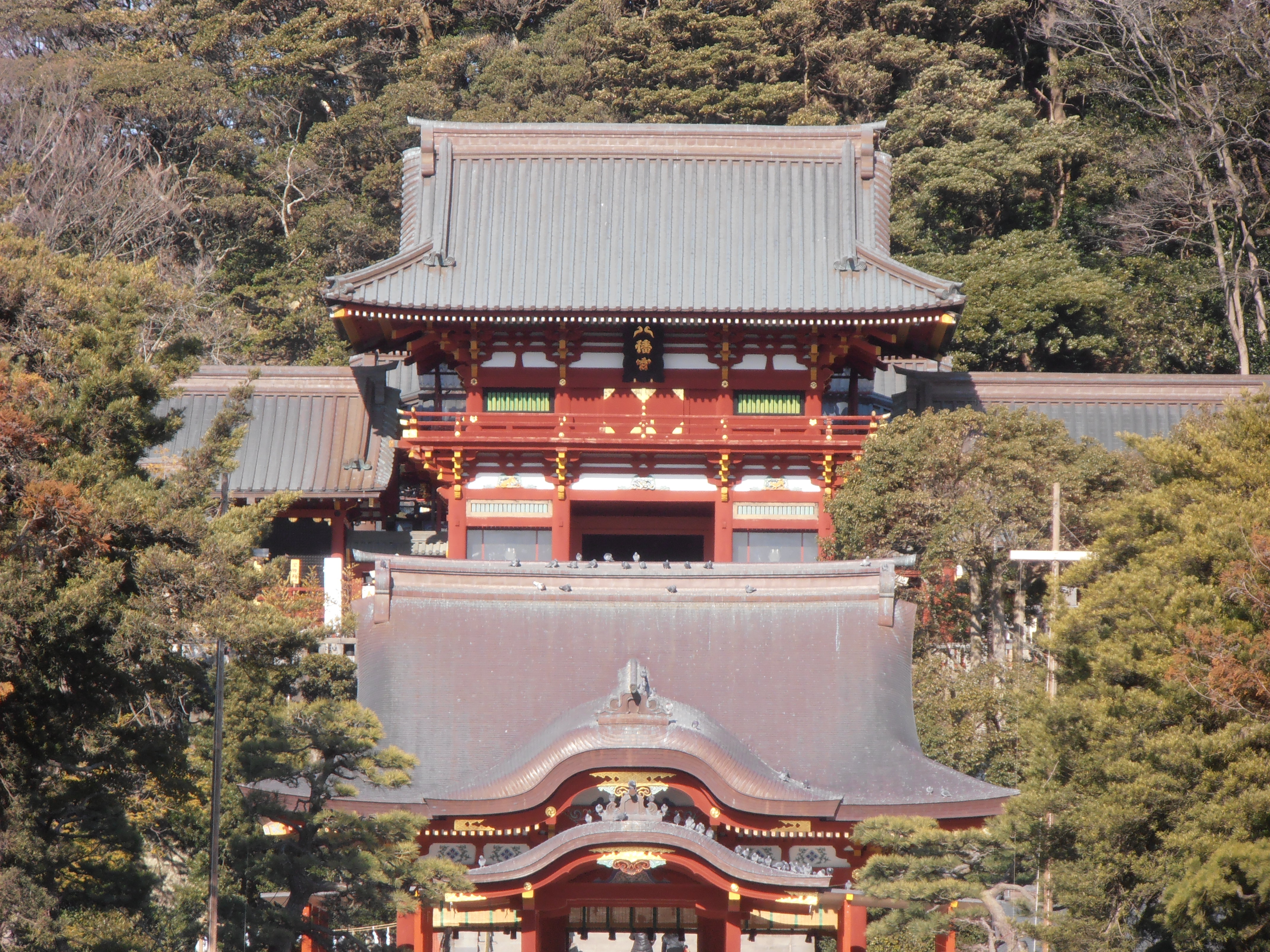
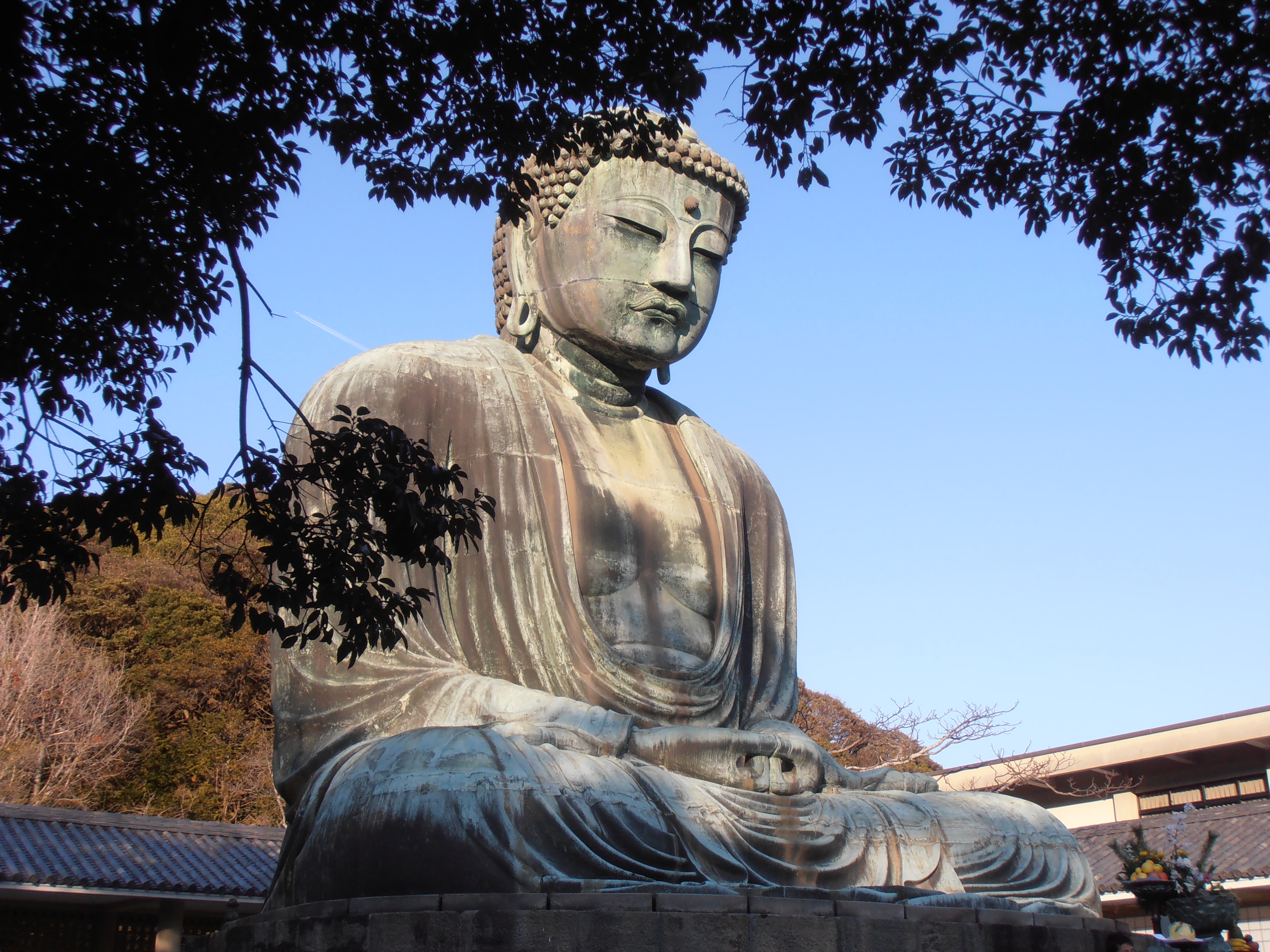
Anyway, allergy-free, and with the end of the school year in sight, I have been enjoying the blossoms and the sunshine. Almost a fortnight ago I spent a glorious day in Kamakura with a dear friend, who was visiting Tokyo for a few days. We visited four shrines and temples; Hōkoku-ji (報国寺), famous for its bamboo forest:

Hōkoku-ji (報国寺)Tsurugaoka Hachimangu (鶴岡八幡宮)

Tsurugaoka Hachimanguthe Great Buddha (大仏)

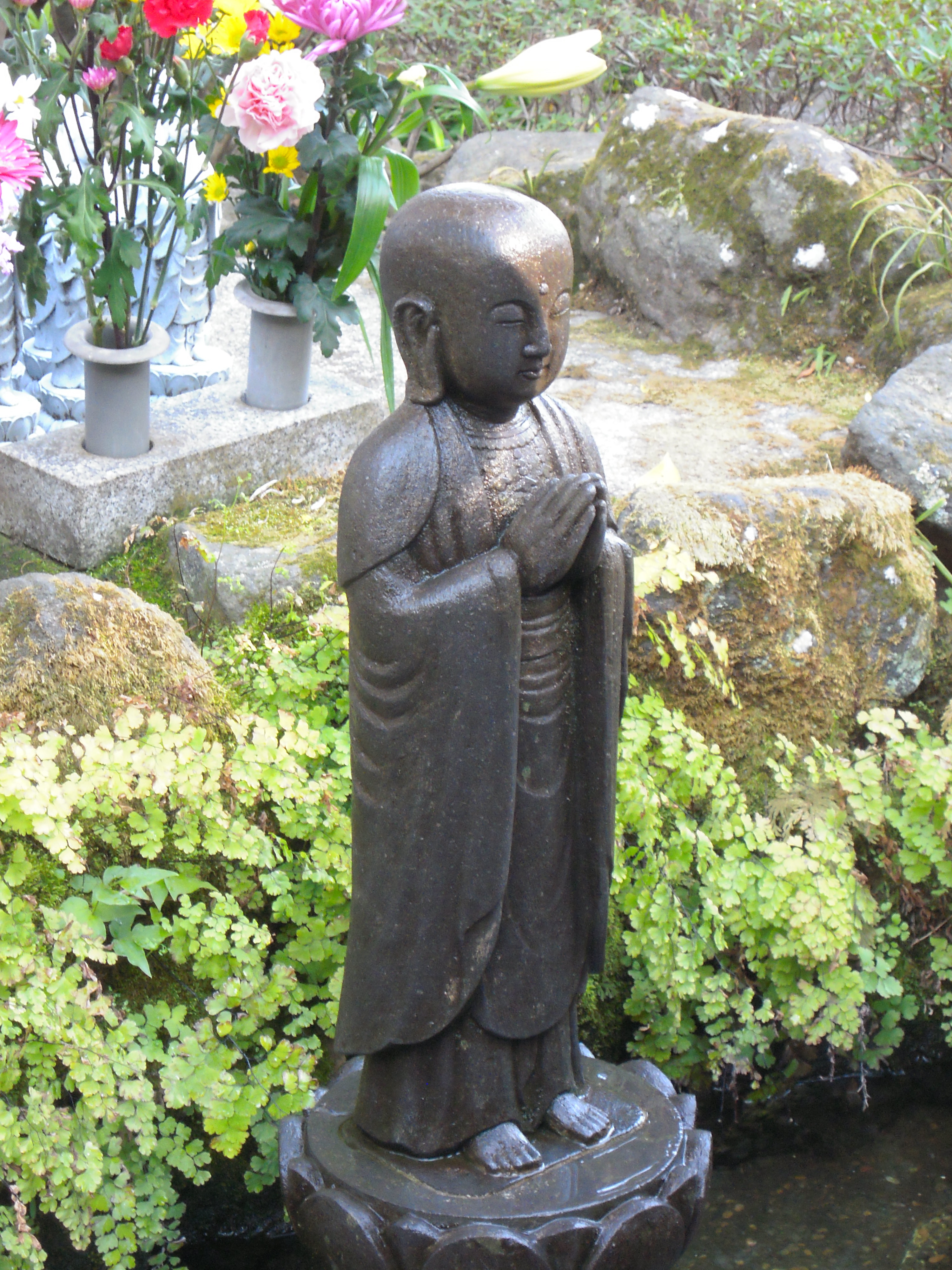
鎌倉大仏and finally Hase-dera (長谷寺).

Hase-deraSometimes I get so caught up in work, in getting everything done, I forget to go outside, to revisit places I love. This day in Kamakura was just what I needed; beautiful weather, inspiring, peaceful places and wonderful company. Maybe it’s human nature to hunker down in winter, to hibernate a bit, and if there’s lots to do at work it’s easy to focus on that. But two weeks ago I had a fantastic day, I came home tired but happy and felt that like the blossoms, I, too, was waking up to spring.

Sugar high

It would be hard to escape the fact that today is Valentine’s Day, wherever you are in the world. For unashamed romantics, as the day draws to a close you may be feeling sad that it’s over for another year. For others, maybe the feeling is more one of relief that the world will no longer be full of pink hearts and red roses. In Japan, we’re just getting started. Valentine’s Day is the first half of a chocolate frenzy which will come round again in exactly a month’s time, but in March it will be called White Day and the giving will, to some extent, be reversed.

There are two kinds of gifts given today; ‘giri choco’ (義理チョコ) and ‘honmei choco’ (本命チョコ). These are chocolate gifts given to men, by women. The first, ‘giri choco’, or the rather splendidly named ‘obligation chocolate’, is given to co-workers and other men to whom the giver has no romantic attachment. Now, that may all sound quite inconsequential, but I remember reading several years ago that Japanese women working in companies could easily spend ¥10,000 on this obligation. That’s a lot of small bags or boxes of chocolate on a lot of male colleagues’ desks. The opposite of this is ‘honmei choco’, usually translated as ‘true feeling chocolate’, and this is generally more expensive, higher quality chocolate, and given to a boyfriend, husband or someone for whom the giver does have romantic feelings. It may be homemade, because that conveys genuine affection and dedication too.

For several weeks, the shops have been stocking more and more chocolate, all packaged ready to be given in obligation or the throes of true feeling, and by the beginning of this week it was all rather mad. I was in a department store on Tuesday evening, and the floor which sells all manner of food, from tea, coffee and rice crackers to cakes and chocolate was a kind of feeding frenzy of shoppers, all women and girls, buying large quantities of chocolate. The Godiva counter had someone conducting a very Japanese form of crowd control, holding a sign aloft with the kanji for ‘end of the queue’ while a small army of staff behind the counter struggled to keep up. Even the rice cracker counters, which normally have no chocolate, were selling chocolate-covered versions of their regular products.

Today I went into school with some trepidation. Working at a girls’ school, Valentine’s Day has mutated into a kind of giant chocolate celebration. You probably have no idea just how much chocolate and how many cookies approximately 1,000 girls can bring into school. You’ll just have to take my word for it, it’s a huge amount. On my way to the first lesson of the day I passed classrooms full of girls, just back from the morning assembly, gathered in a large group, each with boxes or bags of homemade goods, doling out one piece to each girl. The younger students were apparently not eating them, but squirrelled them away into carrier bags to take home. The older ones were already eating – at 8:35 in the morning.

By the time I made my way back to the staffroom two hours later, the air was thick with the smell of chocolate, and the students were crowding in the corridors, eyes glazed, louder than usual, and when I asked one to move so I could get past I had to ask three times. When she finally noticed me she shrieked a greeting but seemed unsure in which direction to move. I was just glad I only had two lessons today. In previous years I have taught more and every lesson has the same pattern; the lesson starts on a mass sugar high, no one can concentrate, but after a while they all crash and have no energy. I know all my colleagues will have worked very hard today, it’s a challenge to keep everyone going to the end of the lesson . . . when they re-group, share out some more sugar and repeat the process again . .  and again . . .  and again. Despite this heroic effort to try to consume it all on campus, they always fail miserably and have to lug carrier bags full of what remains home with them.

I heard from someone that Valentine’s Day has changed in recent years; instead of being a day to be obligated to give gifts to men, women have turned it more into a day to appreciate their friends and give chocolate to other women. The most recent development is to buy ‘my choco’ and eat it all yourself! I suppose the chocolate companies are happy as long as someone buys their wares.