Category Archives: UK

November 11th: Pocky Day

To the rest of the world today is Remembrance Sunday or Veterans Day. I work in a girls’ school in Tokyo so I also know that to some it’s Pocky Day, since the date resembles sticks of Pocky (1111). If you have lived in Japan you are probably familiar with Pocky, the thin biscuit sticks covered with chocolate. Apparently it was first sold in 1966, and since then has been produced in a wide variety of flavours, some regional, some seasonal. At any time I think you can walk into a convenience store or supermarket and pick up half a dozen different varieties. To test my theory I went to my local Familymart yesterday and found seven, but only bought six because one looked unappealing.

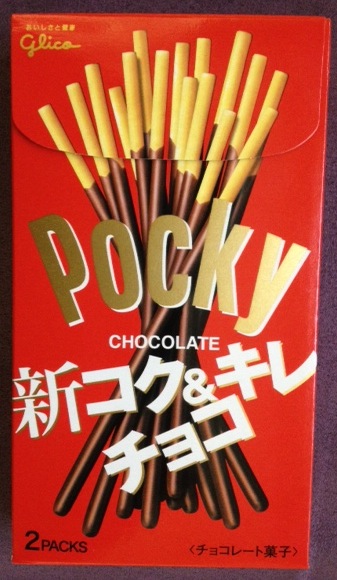
Of course, the one available everywhere and all year round is the red box of Pocky at the top of this post. (I know it’s a bit wonky but I wanted to take my own photo and the shiny box made it a bit of a challenge.) The others readily available which I bought were Thin Pocky, Strawberry Pocky, Chocolate Bran Pocky, Winter Pocky and Almond Crush Pocky. The one I didn’t buy was Double Berry Pocky, and this one plus the Strawberry Pocky are extra appealing (I assume) because the stick is not a simple thin baton but heart-shaped, and on the box they are called ‘heartful’. I have seen cucumbers similarly shaped (cucumbers!) so clearly this makes for a Cuter Snack Experience. A few more heart-shaped stick food items and we’ll be able to call it a boom.

Pocky is apparently so-named because of the onomatopoeic ‘pokkin’ (ポッキン) which is the sound it makes when you bite it. Japanese has a great many of these words, probably topics for future posts, but for today I’ll stick with just this one. In the UK Pocky is marketed as Mikado, since Pocky is for some unfathomable reason not an acceptable name. When I first saw the adverts for Mikado in the UK I assumed it was a Pocky-imitator, and I was surprised to find out it is actually the real thing. I remember finding the advert ridiculous, with a young ‘office lady’ clambering on top of a photocopier to reach the forbidden snack and somehow setting off the machine to take unfortunate photos; I can’t imagine why anyone thought that was a good idea. And the name! Mikado. Because nothing quite says 21st-century deliciousness like . . . a 19th-century Gilbert & Sullivan comic opera.

Pocky is not the only stick-shaped fun you can find in a Japanese convenience store. Pretz is a savoury snack made by the same company (Glico) while Fran is a Pocky-imitator. Pocky itself is available in regular, mousse (thicker chocolate) and decorer (decorated, so even thicker) versions. I’ve never tried the jumbo sized ones, they have the appearance of giant breadsticks and the chocolate-to-biscuit ratio doesn’t look so promising. My personal favourites would be Coconut Pocky in summer, and Winter Pocky in (obviously) winter.

So, having done my research and written this post, I am left with 6 boxes of Pocky. If you’re in Japan you can easily take yourself off to your nearest convenience store and buy some, but if you’re not in Japan – would you like a box?
The BBC’s obsession with Japanese ‘obsession’

This morning I was reading the news on the BBC’s website, when I noticed that one of the most popular articles was listed as ‘Japan’s obsession with blood types’. It just made me sigh.

One of the reasons I started writing e-mail updates after the Great East Japan Earthquake in March 2011 was the way the BBC and other parts of the media were reporting the situation in Japan and how I felt it was not painting a true picture. It was disappointing, and I often sent e-mails to the BBC to say that I disagreed with how their reporters were portraying what they saw here, that what they were saying did not seem to be an accurate account of Japan after the earthquake and tsunami. I remember standing in front of my television one morning, watching Matt Frei reporting from the famous Shibuya crossing, and saying to the screen, that’s not true. It was amazingly frustrating listening to reporters stating as fact something they may have seen in one place, and instead of presenting it as an anecdote (or even speculation) they extrapolated and presented it as a general fact. I e-mailed the BBC many times and never received a response or even an acknowledgement that I had contacted them. I felt better just by e-mailing my concerns, and I wrote my updates, sent them to friends and family, and comforted myself with the fact that at least the people I knew would not be taken in by the BBC’s misrepresentations. Since then, however, I have grown more concerned that the BBC sometimes deals in stereotypes and its stories about Japan may help to confirm a stereotypical view of this great country.

I went to secondary school and university in the 80s, and at the time Japan’s economy was in the middle of the bubble, and I remember watching news reports about ridiculously expensive golf course memberships and companies paying record-breaking amounts for pieces of art, being very excited about getting my first walkman and generally having an impression of a country awash with huge amounts of money and cutting-edge technology. And yes, I know this is not a completely false picture. Now I live in Japan, and have been here for many years, and I have friends who have told me that when they think back to the bubble years they just remember getting up, going to work, coming home late, eating, going to bed, then getting up and doing it all again the next day and the next day . . . I don’t think the majority of Japanese people were spending ridiculous sums on sporting activities because they were too busy working.

Today, Japan has the 3rd biggest economy in the world, and until recently it was 2nd but was overtaken by China. While the images we saw in the bubble years persist in people’s view of Japan from overseas, the fact is that salaries are no longer in the stratosphere and unemployment especially for new graduates and other people in their 20s, was reported at 4.2% in October. Apparently, between 1953 and 2012 the average has been 2.7%; the highest recorded was 5.6% in July 2009, the lowest was 1.0% in November 1968. Clearly these numbers sound low when compared with recent figures from other countries, but it was 4.5% and 4.6% from November 2011 to May this year, and historically this is all much higher than the average for the last 50 years. The Japanese economy, like a lot of the rest of the world, is not doing well. Although Japanese people have traditionally saved money, 11.2% of people have less than one million yen in savings.

I don’t remember seeing any of this information on BBC World, but of course I have a job and don’t spend every minute of every day glued to the television and I may have missed it. What I know I have not missed is the general tone of the reporting, which plays up stereotypes and fails to provide much of a context, and so I come back to the headline which made me sigh this morning.

To be fair, the real headline for the article is ‘Japan and blood types: Does it determine personality?’ and the alternative ‘Japan’s obsession with blood types’ was the one that appeared in the list of most popular stories. However, someone has made a decision that the ‘obsession’ angle is the one which will catch a reader’s attention and I would suggest that it’s not a helpful word and really implies a focus that in my experience Japanese people just don’t have. It’s true to say that Japanese people know their blood type, while people in other countries may not be, as a rule, so aware. I must also say that I am, apparently, true to my blood type and my personality matches. I want to point out, though, that a few years ago a diet book was popular in the UK, and it was called ‘Eat right for your type’ and was based on certain blood types being suited to certain diets. For the record, I must also admit that the foods that suit me were consistent with my blood type according to that book. My quibble is not that there is no truth in it, but that presenting the Japanese people as ‘obsessed’ with this kind of thing is not an accurate portrayal. If you would like to read the entire article, you can find it here: http://www.bbc.co.uk/news/magazine-20170787 .

My second example is an article which was on the BBC website on March 15th this year, just four days after the 1st anniversary of the earthquake and tsunami. It was titled ‘Japan’s obsession with perfect fruit’ and you can read it here: http://www.bbc.co.uk/news/world-radio-and-tv-17352173 . Again, this word ‘obsession’ implies an excessive focus, an attention to this aspect of life which is beyond what most people would have. There is no context to this article, and by omitting several key facts Roland Buerk, the journalist who wrote it, creates an impression that I take issue with. For a start, the exchange rate between yen, sterling and the US dollar gives a false impression, since the yen is so strong at the moment, and he doesn’t point this out, and so gives a false impression of the prices here. The fruit is expensive, but the prices are not quite as high as they might seem. Secondly, the article includes this sentence: ‘Even run-of-the-mill apples can cost $2 (£1.25) or more each in central Tokyo, and families tend to share one or two around the dinner table, chopped up.’ If you can, put aside the ridiculously Dickensian vision of a Japanese family huddled over a single apple, because you may be imagining an apple you could hold in your hand and eat. Unless you are some kind of human anaconda that is not possible with a Japanese apple of the type he is referring to. Recently a friend gave me a Japanese pear and since its size was similar I made a note; it was 38cm in diameter and weighed 773g. Quite the monster fruit, and actually plenty for several people. Mr. Buerk failed to point that out.

My concern with these articles and others the BBC has broadcast or published on the website is not that they are not true, but rather this; they are whimsical, cultural stories, which I can see (from their place on the ‘most popular stories’ lists) appeal to people, and yet they are presented without some background which would make them more informative and using language which misrepresents the Japanese people. When you come across articles which amuse but yet seem to confirm or present a stereotype, please remember that, just as London is not engulfed in smog and populated by men in bowler hats carrying rolled up umbrellas, just as in the UK we don’t all stop for afternoon tea every day, these snapshots of Japan may be just that and not the blanket statement they may appear to be.

Japan has four seasons

If you have never been to Japan, the title of this post probably seems to state the obvious. You may, like me, be dredging up ‘O’ Level geography, and thinking, what’s so surprising about that? Surely Japan has a temperate climate? For anyone who lives, or has lived in Japan, the reaction is more likely to be, oh, that old chestnut. Or, to put a katakana slant on it, that old marron.

Japanese people are very proud of their four seasons, and feel that this makes Japan special in some way. Since it can be a rather frustrating statement, I have, on occasion attempted to point out that this is not something to be filed under ‘Japanese uniqueness’, and have been rewarded with vehement shakes of the head, and the insistence that Japan having four seasons is somehow different from any other country with a temperate climate having the same. I have even, in another attempt to disagree with the statement, pointed out that surely, Japan has five, since there is also the ‘rainy season’ (梅雨) from roughly June 10th to July 10th, but that also is met with incredulity, denial, and repetition of the mantra that ‘Japan has four seasons’.

Clearly, Japanese, like many languages, has four words for the seasons; spring (春), summer (夏), autumn (秋) and winter(冬). So where is this idea coming from, that Japan is somehow different? I would say that Japan is different because Japanese people react differently to the change of seasons. Even in Tokyo, or maybe especially in a huge city like Tokyo, we watch the seasons come and go, we look forward to the cherry blossoms, the autumn colours, we notice the months passing by the fruit and vegetables in the shops, and we take time to enjoy the changes. I remember as a child looking forward to running through the fallen leaves, I remember my grandfather getting roasted chestnuts from somewhere, but as an adult the arrival of autumn meant putting the clocks back, the nights drawing in, and a kind of bracing for the greyness to be endured before the joy of spring.

For a few years, when I first lived in Japan, I found the cherry blossom-viewing season a bit much, I didn’t really understand the eagerness to get out there and look at the blossoms. I don’t remember exactly when I started to feel differently, but these days I feel as if I am almost holding my breath, watching the buds on the trees, just waiting for Tokyo to turn pink. I look forward to buying sakura-flavoured tofu, to meeting friends and wandering around under the trees. I still don’t see the attraction of sitting under the trees with a generator to power a karaoke machine, but maybe that, too, will come with time.

The rainy season, apparently not a season but still called one, is the soggy month we go through before the heat and humidity of the summer really set in. Its Japanese name, 梅雨, is the kanji for ‘plum’ and ‘rain’, but the reality is far less poetic. Some years we have a fairly dry rainy season, but a wet rainy season is an unpleasant experience. The summer that follows it is long and humid and drags on until around the end of September, though by the second half of the month it is noticeably cooler and less humid.

Maybe because it is so long and draining we look forward to the autumn. Almost spookily, the autumn equinox seems to bring a marked drop in temperatures; there’s a chill in the air and anyone still wearing anything short-sleeved will be asked often, aren’t you cold?  In fact, as I was writing this the newspaper man arrived with the bill for this month, and the first thing he said was, it’s got cold, hasn’t it? Yes, it has, but the temperature is still around mid-teens celsius  every day with no need for heating yet, at least in Tokyo. I know the UK is already a lot colder.

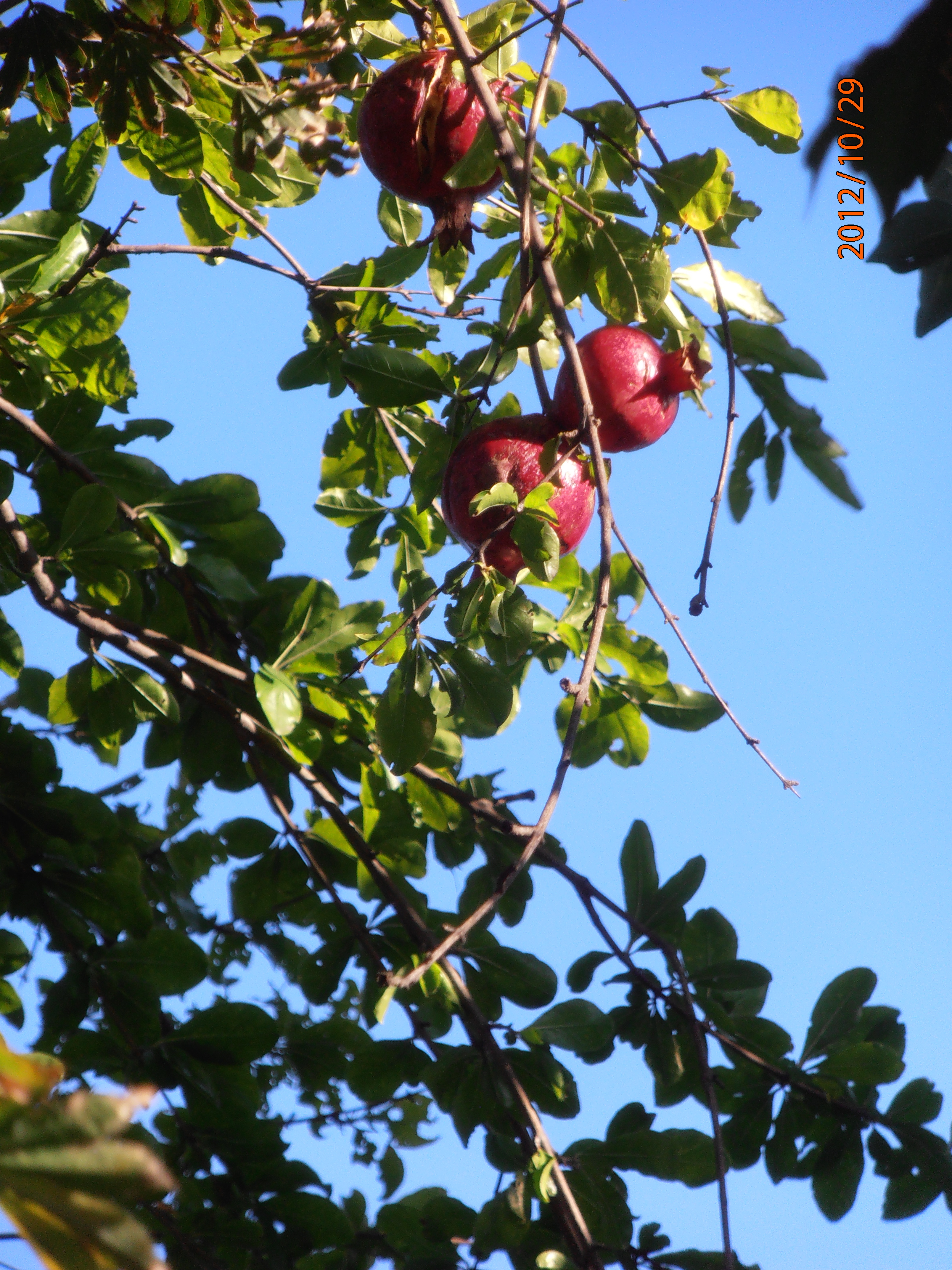
The autumn colours can be spectacular, and just as there are places known to be especially good for cherry blossom viewing (お花見) there are also places famous for their ‘red leaves’ (紅葉), but really, you don’t have to go far. This afternoon I walked down to Senzoku Ike (洗足池) or Senzoku Pond and found the early signs of autumn and some leaves already starting to turn. It was a beautiful sunny afternoon, slightly breezy, and there were a lot of people out enjoying the park. I found trees laden with pomegranates and persimmons,


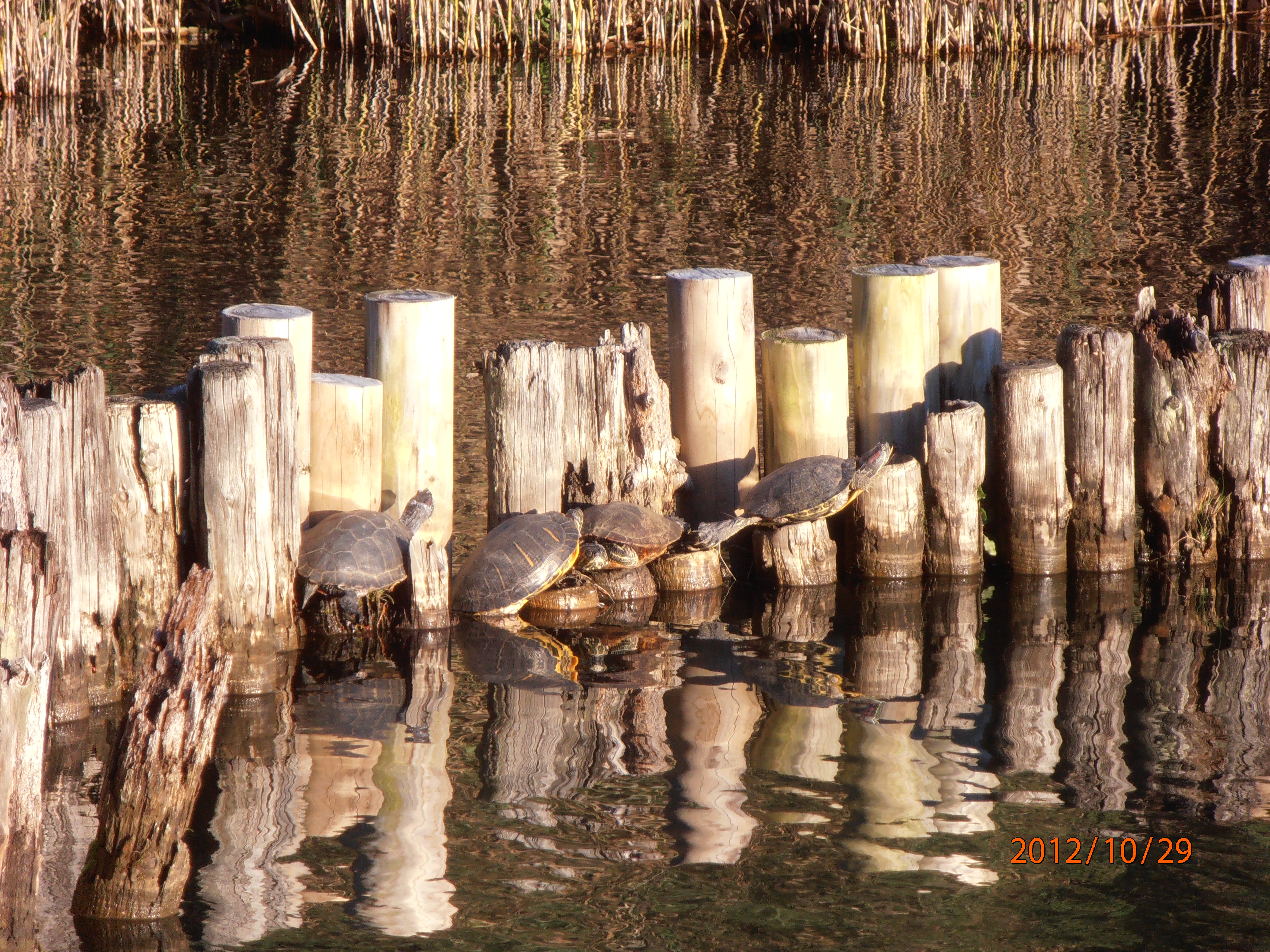
I saw turtles basking in the sun,

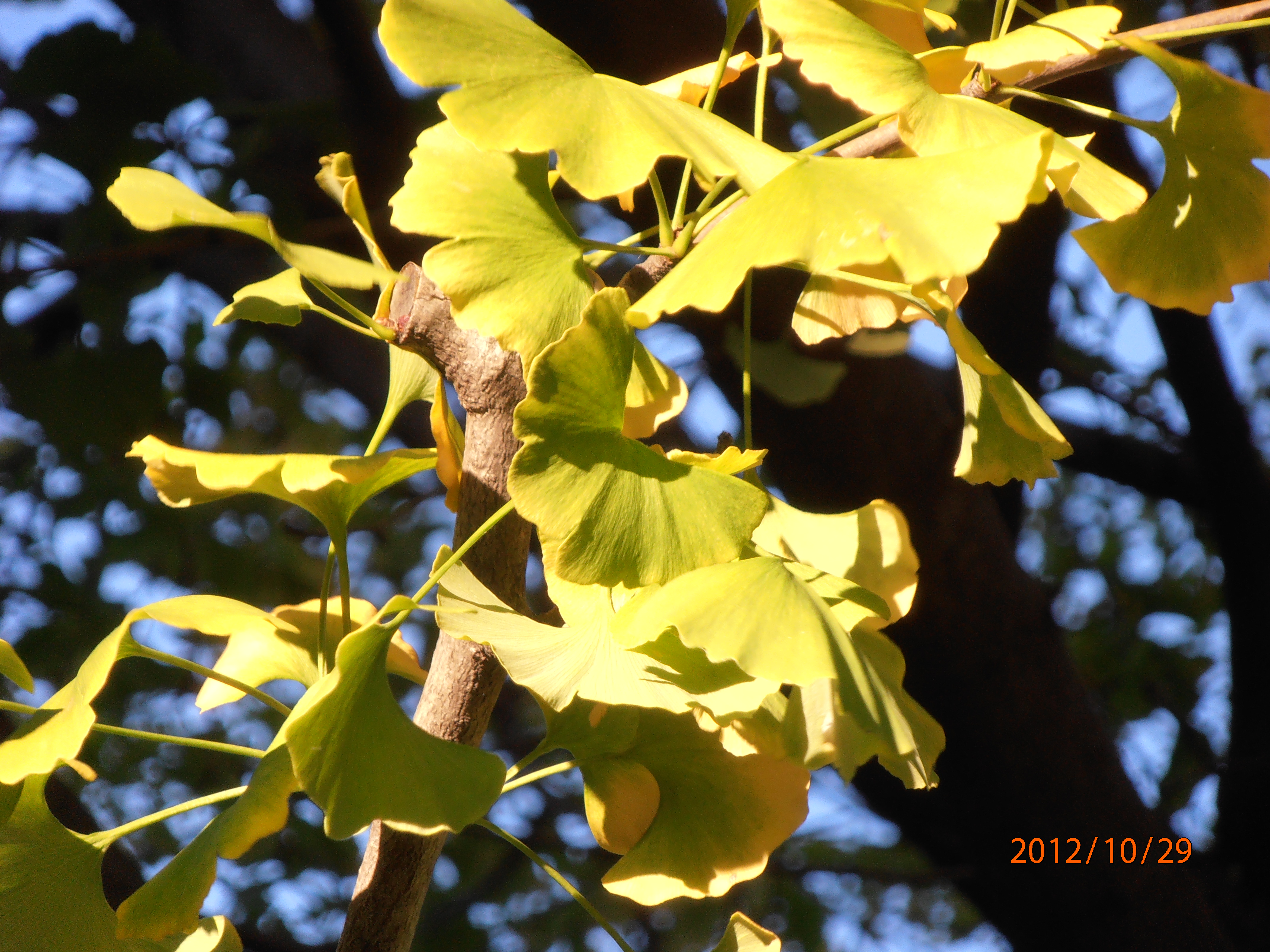
and a gingko tree with bright yellow leaves against the blue sky.

Japan has four seasons. A lot of other countries do too, but Japan is different, not because of the number but because so many people make time to go outside and appreciate them.