Tag Archives: Fukushima

Goodbye 2013

tokyo sunsetWhen people hear that I teach in Japan the most common reaction is some kind of assumption that all the students (a) work incredibly hard, (b) are unquestioningly obedient and well-behaved and (c) are quieter than proverbial church mice. My response to this is (a) their industry is the same as students in other countries, some work very hard, others do not and many are hindered by a lack of study skills, (b) they are certainly less of a challenge than the students my friends often teach in the UK but not unremittingly well-behaved, and (c) I work at a girls’ school, are you kidding?

As I have mentioned before, I think Japan is a country which is often portrayed in a stereotypical manner, and the appetite for wacky stories in foreign media is always there. What people say to me about my students is an extension of what many people believe to be an accurate portrayal of Japan and its people. It is frustrating to live here and watch with disbelief as yet another journalist files a stereotype-laden report, or takes one incident and extrapolates to imply a general truth. In over twenty years in Japan I have yet to meet a Japanese person who conforms to all those stereotypes, the quiet, obedient automaton.

Over ten years ago, a Swedish gospel singer came to visit the school, and as she sat on the stage waiting to begin a question-and-answer time after she had performed, she remarked that she could tell she was at a girls’ school because there was a noticeable level of chatter in the hall. Some things are not a surprise. What may come as a surprise to people who only know of Japan through cliché’d news items is the levels of noise in Japan sometimes. It is not always a land of zen-like tranquility, as anyone who has ever walked past a pachinko parlour can tell you. Politicians, right-wing sound trucks, recycle companies, roasted sweet potato vendors and purveyors of laundry poles are all capable of disturbing your wa (和), or harmony, as you relax at home, walk down your local street or take the train.

There is a word in Japanese which has a lot of different meanings, but Japanese language learners probably first encounter it as ‘noisy’: urusai (うるさい). My dictionary, however, offers all of the following as possible meanings: noisy, loud, annoying, troublesome, bothersome, persistent, fussy, particular and fastidious. I would say a person who is ‘urusai’ is a wa-disturber, and this year the leading lights of the Liberal Democratic Party (LDP) have been disturbing all kinds of wa. That their antics have not been more widely reported internationally is disappointing. I have heard Japanese friends express concern that this is how Japan slid towards militarism in the 1930s.

So, just to do my bit to draw attention to what Japanese politicians have been doing this year, here are their greatest hits:

* In May, Toru Hashimoto, the Mayor of Osaka declared that the ‘comfort women’ (women forced into prostitution by the Japanese military during WW2) were ‘necessary’. You can read about it here:

http://www.bbc.co.uk/news/world-asia-22519384

* In July, the Deputy PM, Taro Aso (also a brother-in-law of the Emperor) suggested that Japan could learn from how the Nazis pushed through unpopular legislation. You can read about it here:

http://www.bbc.co.uk/news/world-asia-23527300

He was referring to the current government’s desire to abolish Article 9, the part of the Japanese Constitution in which Japan denounces war and the means of war. Mr. Abe, the Prime Minister, has been getting more and more bellicose and would very much like to ditch Article 9 and arm Japan to the teeth. There is a hefty, so-called Self Defence Force, but Mr. Abe wants more. There have been groups all over Japan for a long time to protect Article 9, but this year it has come under serious threat.

* In September PM Abe reassured the IOC that Tokyo is and always will be safe from any danger that may come from the crippled nuclear power plant, Fukushima Daiichi. Following his statement and Tokyo being awarded the 2020 Olympics, the word ‘lie’ was used by parts of the media to refer to his comments. You can read about it here:

http://www.internationalpolicydigest.org/2013/09/25/did-japans-shinzo-abe-lie-to-get-the-olympics/

* Of course, the news that has rumbled on all year is the ongoing dispute between China and Japan (and Taiwan) regarding sovereignty over the group of tiny islands in the East China Sea, known in China as the Diaoyu Islands, and in Japan as the Senkaku Islands. In November China  declared an ‘air-defence zone’ over the islands, just the latest move in this very dangerous dance. You can read about it here:

http://www.bbc.co.uk/news/world-asia-25062525

* Finally, at the end of the year, Mr. Abe decided to make a visit to Yasukuni Shrine in his capacity as Prime Minister. While millions of Japan’s war dead are enshrined there, the souls of hundreds of war criminals, including a number of executed Class A war criminals are also enshrined, and it is this fact, and the apparent honouring or worship of these souls which so infuriates China and South Korea. You can read about it here:

http://www.bbc.co.uk/news/world-asia-25517205

So, Japanese politicians, I would say that you have been very ‘urusai’ this year, that this war-mongering is deeply troubling, that your lack of sensitivity (or deliberate disregard for other people’s and other countries’ feelings) is equally concerning. What are you doing to the country I love? This has not been a great year for Japan. With the exception of the successful Olympic bid, which did seem to boost spirits, 2013 has been a steady stream of worrying news from TEPCO and Fukushima Daiichi and the constant sound of rattling sabres.

So for 2014, my first prayer is for a concerted effort to really do something about the giant mess that is Fukushima Daiichi. The situation there is scary and there are many people who don’t know if, or when, they can ever go home. My second prayer is also related to the aftermath of the earthquake and tsunami; that the people who are still living in temporary housing almost three years later be re-housed in permanent new homes. My third prayer is for peace between the countries in East Asia, that we can all be much better neighbours than we have been in 2013.

12:30 blue skyFor myself, this has been a very mixed year, but I am ending the year feeling positive. I have travelled and seen friends, and in my life in Tokyo I have so many blessings. I have a job I love, friends and colleagues I am grateful for. In the last fifteen months I have found a new joy in writing this blog and been amazed that people read it. It’s a very humbling feeling. I am going into the new year with plenty to think about, lots of things I want to do.

Yesterday I was in Shibuya and saw a lot of people with suitcases, on their way somewhere to celebrate the New Year. When I went out to do some grocery shopping this afternoon I noticed how quiet everything was already. With the exception of the crowds in the supermarket there weren’t many people about. Tomorrow I am going to start the year the same way I did this year, walking a Seven Lucky Gods pilgrimage. The weather forecast is for another sunny day.

Goodbye, 2013. You’ve been an interesting year; not the best, but not the worst either. The neighbourhood has gone quiet, and I can hear the sound of the local volunteer fire corps on their yomawari (夜回り) or night patrol warning us of the perils of starting a fire. My new year cards are written and mailed, it’s time to curl up and relax.

new year postbox

Japan for lazy journalists

Hina dolls

It seems to be a truth universally acknowledged by British journalists in Japan that this is a wacky country, full of people behaving oddly. All you need to do to file a report is ask a few people their opinions, extrapolate some general truths from what they tell you, attach some stereotypical images or statements and voilà! You just reported from Japan.

Or did you?

Japan is a fascinating country, and is no more stereotypical than any other country. Of course you can portray Britain as a nation of cups of tea, football hooligans and Peter Rabbit. France has its snails, garlic and berets. Edified? Fascinated? Want to hear more? No, I didn’t think so. So why is there an appetite for these entertaining-but-shallow-to-the-point-of-saying-nothing-new-at-all articles about Japan?

In the UK I would imagine that Clive James has a lot to answer for. To general acclamation and amusement, he filled a lot of TV programmes in the eighties with footage from Japanese quiz shows and commercials. Takeshi’s Castle, a game show from the late eighties presided over by Takeshi Kitano was at least recently shown on British TV and assumed to be representative of Japanese TV today. These are the images burned into the British psyche, over-the-top TV programmes, Japanese people gone wild.

What is disappointing is this; when British journalists come to Japan they set about reinforcing these stereotypes, instead of exploring this great country and testing the clichés to see if they hold true. Yesterday evening on Facebook, two friends shared a link to a newspaper article , the latest in this proud tradition of recycling tired ideas and calling them your own. I found it exasperating for three reasons; it repeats clichés about Japan; it presents facts or ideas that have been around for a while and are nothing new and for good measure it throws in an extraordinarily offensive blanket statement about Japan. The article in question is titled, Why have young people in Japan stopped having sex? and was written by Abigail Haworth, who has also written for Marie Claire. The article would probably have fitted much better in a magazine, though I would still take issue with a lot of the content. (I have tried to add the link here but can’t seem to make it work, oops.)

The article leads off with promises of much titillation to come; not only has she managed to use the word ‘sex’ in the headline, but in the first paragraph we meet a woman who used to be a ‘professional dominatrix’. More random facts about her make up the majority of the first four paragraphs, with a small number of statistics about Japan’s falling birthrate mixed in. And so it goes on . . . and on . . . and on . . . seesawing between a strange mix of 6th-form level research about Japan’s population, and pronouncements from the ex ‘professional dominatrix’ about the state of intimate Japanese relations.

There is actually a large amount of data but it is dumped unceremoniously throughout the article, maybe to prevent it from being solely the thoughts of one Japanese woman with an unusual CV. There are glancing references to the 2011 tsunami and ongoing problems at Fukushima Daiichi, as well as mention of social phenomena, such as hikikomori (shut-ins), otaku (geeks or nerds) and the charmingly named ‘parasite singles’ (single adult children who continue to live with their parents). In fact, the article becomes a catalogue of social issues without managing to analyse even one of them in any depth. Because that would undermine the point of the article, which seem to be justifying interviewing a very dubious woman who has set herself up as an expert with no apparent training or qualifications.

In addition to her main interview subject and a relentless flood of statistics and reference to social issues, Ms. Haworth also interviews several twenty- and thirty-something Japanese people, who declare that relationships are ‘mendokusai’, or tiresome, troublesome. They’d rather do other things, like concentrate on their career (or play games on their smart phones). They view personal relationships, with the demands that would be made on their time and money, to be too much trouble. For the women, the choice presented is an either/or proposition. Do you want a career or a marriage and family? You can’t have both. Well, yes, you can. It’s not easy, but Japan needs more people in the workforce, and more woman are expecting to have a career. It’s hard to juggle everything, but isn’t it hard for women everywhere?

The number of social issues mentioned in passing is quite breath-taking: celibacy syndrome, hikikomori, otaku, parasite singles, oniyome (devil wives), soshoku danshi (grass-eating men), otomen (girly men) . . . each one would be an interesting subject for an article, but Ms. Haworth is eager to bring the article full circle and return to the dominatrix.

Anyone reading this article who knows Japan will recognise all the terms used, and will also understand that this preoccupation with the falling birthrate has been a concern since the ‘1.53 shock’ in 1990. The birthrate continued to fall until it reached its lowest in 2005, when the average number of children fell to 1.26. Since then it has increased slightly, but is still at a level to cause concern, particularly when the impact of the ageing society is also a factor. Japanese life expectancy is the highest in the world, and the costs that go along with that are huge. The country needs a workforce large enough to take care of the elderly. But this is not news, it’s been a concern for over two decades already.

More Japanese women are expecting to have a career, to have some financial independence. This is an appealing idea. They probably grew up during the Bubble years, when family life to them meant their mother working hard at home and taking care of the family, while their father was a kind of drone, working long hours, bringing home his pay, but not having much to do with the emotional life of his family. In the nineties I can remember some of my students telling me they didn’t see their fathers from one week to the next; he was gone before they got up in the morning, he came home after they went to their rooms at night, and on Sundays he went to play golf. They heard him coming and going but didn’t see him or interact with him at all. Japanese family life might seem to be under threat now, but the foundations started to crumble decades ago, in the post-war years, when everyone was working to rebuild the country. Everything else took a back seat.

I wonder about the impact of smaller families on the attitudes and social behaviour of today’s twenty- and thirty-somethings. With smaller families there are far more only children who have grown up not having to share, who are comfortable with their own company, with some kind of solitary life. They either live alone, or they live as a ‘parasite single’ with their parents, and have their needs taken care of. Why swap that for a different kind of arrangement that requires more work?

I also wonder about the impact of Western ideals, all the Disney princesses, the Hollywood movies, the expectation of a love story and happily ever after. Pre-war, most marriages were the result of the system known as omiai (お見合い), sometimes referred to as arranged marriages, but really arranged introductions to suitable partners. Post-war, the Western concept of courtship and marriage, commonly referred to as ren’ai kekkon (恋愛結婚) or love marriage has become prevalent, but even in 2013 over 6% of marriages are the result of omiai, and posters advertising agencies promising marriage within a year are a common sight on trains. It seems to me that a young Japanese woman, contemplating her parents’ marriage and the effort required to achieve happy ever after might be more inclined to think, no thank you, I’d rather put my energy into my career.

In the article there is quite a lot of attention paid to Japanese people’s reluctance to have physical contact, and again, this is an imposition of Western expectations. Japanese people are not a nation of touchy-feely people. They are not huggers, they are bowers. Japanese people are not given to displays of physical affection, with their significant other or their family, even their children. I have been told by many students that they know their mother loves them because of what she does for them, especially providing delicious food, not because of hugs and kisses.

Finally, I mentioned at the beginning of this post that I was frustrated by three aspects of this article; the lack of new information, the clichés and a blanket statement. Buried in the middle of the piece, Ms. Haworth refers to Japan as ‘a country mostly free of religious morals’. That any journalist would write such an extraordinarily sweeping and damning sentence about any country, I find quite breath-taking. That any editor would let it through also amazes me. There are no facts or statistics to back this up. The majority of Japanese people refer to Buddhism or Shinto for their religious beliefs and ceremonies. Unlike Christianity, neither Buddhism nor Shinto requires or expects weekly attendance, so it’s difficult to find any kind of study which measures religious morality. I couldn’t find one. Therefore, standing alone as a bald statement, Ms. Haworth’s claim that Japan is ‘mostly free of religious morals’ is unsubstantiated and offensive.

I was very disappointed to read Ms. Haworth’s article, and saddened to see on the newspaper’s website that it is being read by a lot of people. Japan is dealing with a lot of serious issues; tensions with its neighbours, the problems with Fukushima Daiichi, Mr. Abe’s government and its desire to change the constitution – there are plenty of things any journalist with a sincere desire to inform readers about this country could be writing about. A dominatrix setting up shop and holding forth about people’s sex lives? That’s very lazy journalism.

Tokyo: A safe city?

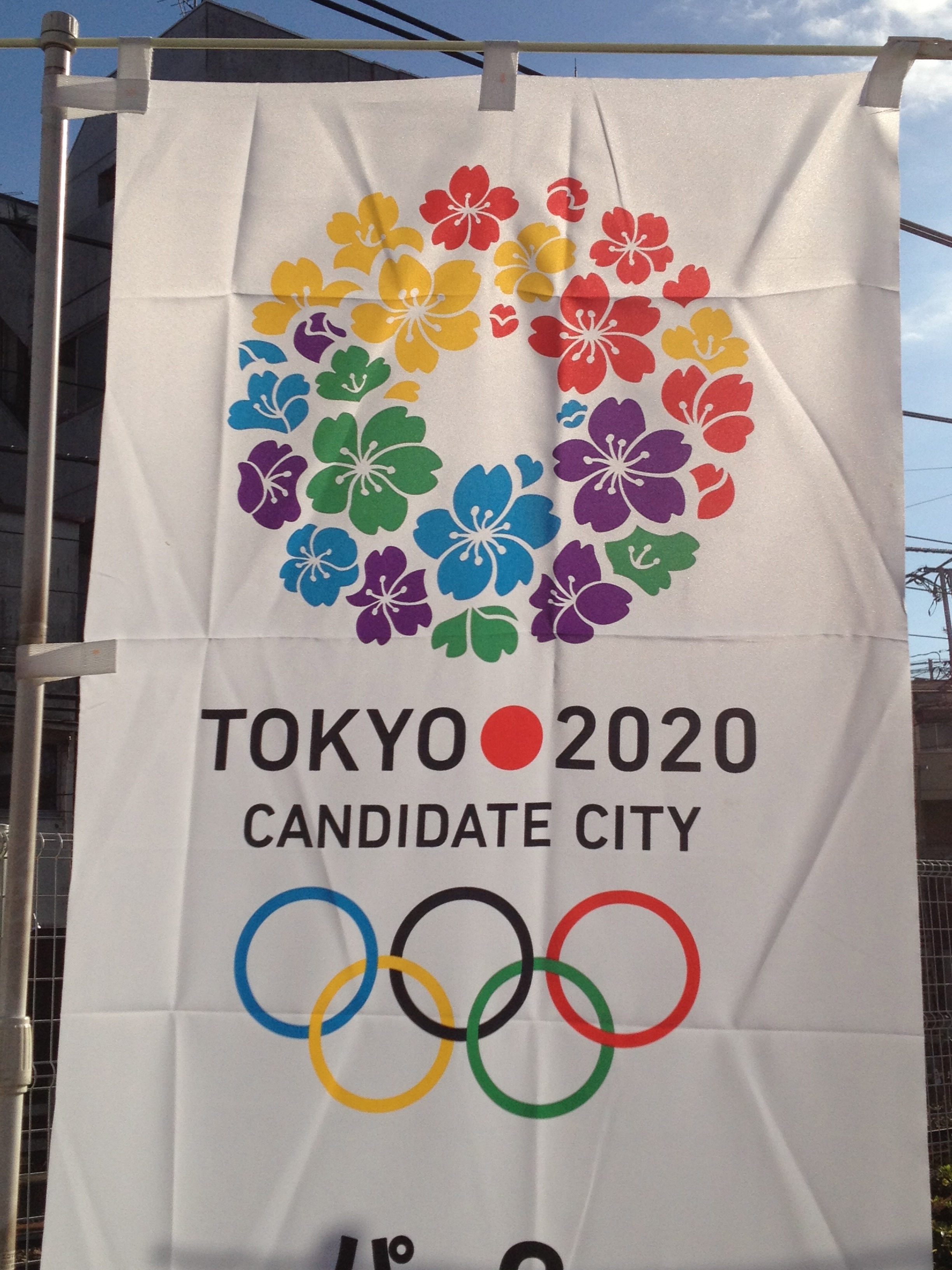
Olympics4On Sunday mornings I have a very early start, and am regularly awake by 5am, so this morning I was already up and watching the news when Tokyo was announced as the winning bid to host the 2020 Olympics. I watched the Japanese delegation in Buenos Aires jumping up and down, the scenes of jubilation from the arena in Komazawa Park, built for the 1964 Olympics, and I thought . . . well, I thought a few things. I have quite mixed feelings about it.

The Japanese bid had focused on being a safe choice: ‘the Olympics will be safe in our hands’. But what does ‘safe’ really mean?

First of all, the statement that I think most people would agree with, that Tokyo is generally a safe city for tourists and for residents. There are clichéd stories of people losing valuable items and getting them back, but it really does happen. Wallets, purses, mobile phones – drop something in the street, leave it on a train and if you go to the police box or station office there is a high chance that you’ll get it back. Not every time, but a lot of the time.

A few years ago, a group of people from a small company I knew in Tokyo went to the UK on what was termed a ‘study trip’ (= junket). On their return they told me that a woman in their group had had her handbag snatched one day. She had been shocked but also infuriated and so had given chase. She had managed to retrieve her handbag (Japanese company employee 1, Petty Criminal 0) but when she wrote a report about their trip she included an account of the incident (which I wholly understand) and concluded with this statement:

‘Japan is safe. Abroad is dangerous.’ (日本は安全、海外は危険) Cut and dried, black and white. No more to say. Of course, it’s not that simple, but with the exception of a few places, I would go anywhere in Tokyo at any time of day or night, on my own, and I would feel safe. I often walk home from the station at ten or eleven o’clock, listening to my iPod, and I don’t worry about being safe. I wouldn’t do the same in the UK. I go out and leave my windows open, and in fact left them open while I was away all summer. I leave windows open at my mother’s house in the UK, but she lives in a village and even that is against recent police advice and know friends and family in cities who lock everything before they go out. I have friends in rural parts of Japan and even Tokyo who never lock their doors.

Japan is safer than many, if not most other countries. Japanese citizens and residents who have got used to life here need to remember that when they travel and be more cautious, but the idea that someone is imperilled the moment they step off the plane in another country is not true.

So, Tokyo will be a safe place to hold the Olympics. Visitors can be generally assured of their personal safety. Yes, I will give them that. Generally, that is a truthful statement.

Next, the Tokyo bid claimed to be a safe (reliable) city which could be counted on to complete construction on time, to have a mass transit system capable of moving huge numbers of people from A to B. Again, I would give them that, but the way it was highlighted left a bad taste on one memorable occasion. At the end of April, Tokyo Governor Naoki Inose cast aspersions on Istanbul’s bid in the most general and unpleasant terms, when he criticised Islamic countries (yes, all of them), saying, “The only thing they share in common is Allah and they are fighting with each other, and they have classes.” He was slapped down by the International Olympic Committee, who said that cities bidding for the Olympics should not make negative comments about rival bids. Governor Inose apologised, first claiming that he had been taken out of context (that old chestnut) but then acknowledging that his remarks had been ‘inappropriate’. That was the end of the story.

But while that was the end of Governor Inose’s mouthing off, he was following in a long tradition of Japanese politicians saying offensive things, and then trying to wriggle out of it by saying their words had been taken out of context. Gov. Inose’s immediate predecessor, Shintaro Ishihara, was of course well-known for his offensive remarks, but he seemed to enjoy the upset he caused and unlike other politicians never seemed apologetic. However, Deputy Prime Minister Aso was true to form in July when he made remarks regarding the government’s desire to change the constitution, specifically to remove Article 9, in which Japan renounces war and the means of war. He suggested that Japan’s government copy Nazi tactics to push through constitutional changes: “The German Weimar constitution changed, without being noticed, to the Nazi German constitution. Why don’t we learn from their tactics?” You can read the full article here:

http://www.bbc.co.uk/news/world-asia-23527300

This is probably the subject for a separate blog post, but it does seem to me that Japan doesn’t ping the international radar with its unsavoury behaviour, and I wonder why. Maybe Japan seems non-threatening, not a country that could pose a threat, but anyone who knows about the rise of militarism here in the 1930s knows that’s not true.

But back to the second idea that Japan is safe, meaning reliable, will have everything ready on time, and be able to move everyone around the city efficiently. Yes, I will give them that too, but how much will it cost? The Japanese economy has been stagnating since the bubble burst in 1990, and the gamble seems to be that massive construction will boost the economy and a fat profit will be made. In the meantime, the taxpayers of Tokyo will be picking up the bill.

Finally, the aspect of Japanese safety that has been in the news a lot in recent weeks: Fukushima. The Godzilla in the room.

Two and a half years ago, a tsunami slammed into Fukushima Daiichi nuclear plant, and three of the six reactors went into varying degrees of meltdown. The hapless, incompetent and arrogant Tepco (Tokyo Electric Power Company) has been trying ever since to get on top of the situation, while running rings round the government and anyone else trying to get an accurate picture of what is going on. Now it seems they never really got their act together and since last month the facts and figures finally emerging have painted a very scary picture. Water contaminated with radioactivity is leaking into the Pacific, and into the ground around the plant. It has reached such high levels that anyone exposed to it would die within hours.

This was the issue which threatened to derail the Tokyo bid, and Prime Minister Abe addressed it personally when he spoke in Buenos Aires before the final vote. According to the BBC, “He allayed fears over the crippled Fukushima nuclear plant 150 miles (240km) from the city by saying: ‘It has never done, and will never do, any damage to Tokyo.’ ”

Yes, well, boo to that, Mr. Abe. That’s not so far away from Tokyo, and while I know it’s Tokyo which will host the Games, I don’t think that’s totally the point. 150 miles (or 240km) away from Tokyo there is a serious, ongoing nuclear incident. The most serious since Chernobyl. There is an exclusion zone around the plant, a dead zone, and who knows if people will ever be able to live there again? The spent fuel rods were, last time I saw any information about them, 4 storeys up in a damaged building, in a tank of water, exposed to the elements, covered with blue tarpaulin. The plans to sort out this mess are measured in terms of years, apparently lacking any sense of urgency. What would happen if a typhoon hit the area? Or another earthquake and tsunami? It seems to me there is a lot of gambling on what probably won’t happen, and politicians making statements about scenarios that will ‘never’ happen. But can they really give such absolute guarantees?

After the earthquake and tsunami in March 2011, the number of tourists visiting Japan fell dramatically. Despite assurances, people didn’t want to risk it. There are some words which people react to on a very instinctive level. I would suggest that those words would include ‘earthquake’, ‘tsunami’, ‘nuclear meltdown’, ‘radiation’ . . .

150 miles or 240km. Does that sound like a great distance? In the UK that is the equivalent of London to Chesterfield or Cardiff, and in the US, Washington DC to Philadelphia PA, or Baltimore MD to Richmond VA.

Do you still feel safe? Would you still feel confident that people will travel here and happily ignore the risks? We’re not talking about vast distances here.

Underneath the declaration that Tokyo is safe there is so much more information, so many more aspects to this. Facebook has lit up today with a wide range of opinions. This is in no way anything other than anecdotal, but from what I have seen, opinions range from a straightforward, ‘Yay for Tokyo, that’s great!’, to ‘Oh no, Tokyo shouldn’t have got it’. There are a lot of mixed feelings, and that is where I find myself.

I am proud of this city, I love so much about it, and I’m excited that Tokyo will have an opportunity to showcase what’s great about it, that people will come and have an amazing time. That certainly happened when Japan co-hosted the 2002 Football World Cup. But, but, but . . . how much will it cost? Will it make an already emboldened, aggressive and increasingly xenophobic government even bolder? Some have pointed out that Mr. Abe probably won’t be the Prime Minister, that this current crop of unpleasant fellows will not be in power. True. But the LDP has been in power for most of the last seventy years, do you think that’s going to change? It won’t be Abe & Co. in power, but in the tradition of generations of political families here it will probably be their younger brothers or sons.

I do hope that the 2020 Olympics will be a wonderful opportunity for Tokyo. I really do. But I also hope that for the next seven years, there is a spotlight on Japan, that the rest of the world watches what Japan’s leaders say and do, that they are held to account, and that they deal with the situation in Fukushima sooner rather than later, not just for the Olympics, but for all the people in Tohoku who have already endured two and a half years of Tepco lies and government ineptitude.