Burrowing into the news that matters

hamster

Japan. The 3rd largest economy in the world. A country with a population of over 120 million. A country which suffered a magnitude 9 earthquake and devastating tsunami in 2011. A country still trying to sort out the nuclear mess in Fukushima, still trying to build new homes for about quarter of a million people displaced by those events. A country currently engaged in a protracted and heated row with China over the Senkaku (Diaoyu) Islands. A country where senior politicians visit a controversial shrine to the country’s war dead with increasing frequency and decreasing concern for the feelings of people in other Asian countries.

Japan. According to the BBC World website this weekend, a country obsessed with hamsters’ bottoms.

On May 4th, Japan was hit by the most powerful earthquake since the huge one on March 11th 2011 and the subsequent, related aftershocks. Since it was ‘the biggest since . . . ‘ I expected there to be some report of it on the BBC news, but not a squeak, all day. I checked the website too, thinking there must be something there, but again, nothing. It was reported elsewhere, but not by the BBC, at least nowhere I looked.

On May 15th, the Asia section of the BBC website had an article titled ‘Japan PM Abe calls for new defence law interpretation’:

http://www.bbc.com/news/world-asia-27420077

The part of the constitution the government would like to reinterpret, since that’s the word we’re using, is Article 9, which states:

‘Aspiring sincerely to an international peace based on justice and order, the Japanese people forever renounce war as a sovereign right of the nation and the threat or use of force as means of settling international disputes. To accomplish the aim of the preceding paragraph, land, sea, and air forces, as well as other war potential, will never be maintained. The right of belligerency of the state will not be recognised.’

Now, you may think that Japan’s massive Self Defence Force is therefore unconstitutional; there are certainly people in Japan who believe it is. However, the Supreme Court has, on several occasions, affirmed the SDF ‘s constitutionality. So, Japan can have its SDF, but Mr. Abe’s government would like more. China, South Korea, and other Asian countries who have been at the sharp end of Japanese military aggression in the last century take a dim view of this. The BBC article in question featured a photograph of Mr. Abe shaking his fist and looking suitably decisive or aggressive, depending on your, ahem, interpretation. The article is still available but disappeared from the headlines on the Asia page in less than twenty-four hours.

Earlier this week, on May 20th, the New York Times reported on what had happened at Fukushima Daiichi in the days after the tsunami hit, in an article headlined ‘Panicked workers fled Fukushima plant in 2011 despite orders, record shows’, which is only just in the news because the report was not public until recently.

http://www.nytimes.com/2014/05/21/world/asia/fukushima-workers-fled-plant-after-accident-despite-orders.html?_r=0

The BBC reported this a little later. There has also been an article about groundwater being diverted and pumped into the ocean before it can be contaminated by whatever is going on at the plant these days. At the end of this article is a link to the one about workers at the plant and the aftermath of the tsunami.

http://www.bbc.com/news/world-asia-27487332

However, to get to the article above, you have to scroll down past a section called ‘Also in the news’ and this headline:

Craze for hamster bottoms hits Japan

which you can read in its entirety here:

http://www.bbc.com/news/blogs-news-from-elsewhere-27515892

And so once again, here I am, taking issue with the BBC’s reporting of Japan. It recycles those lazy stereotypes of Japan; that Japanese people are ‘obsessed’ with ‘cuteness’ and other weird and wacky stuff. Apparently there are books about hamsters’ bottoms (‘hamuketsu’), there is a Facebook group, it is a ‘craze’, it is a ‘phenomenon’, there are ‘thousands of fans’, there have been ‘hundreds of photographs’ uploaded to the Facebook page.

I have checked this page, and fewer than 10,000 people have ‘liked’ it. As you might expect, it’s a collection of uploaded photographs of hamsters’ bottoms. After a few you wonder who on earth wants to look at a lot of them. Checking other Facebook pages for Japanese sportsmen and women, for musicians, and animation characters, I found that they all had far more ‘likes’.

Then I started to wonder, is this really a ‘craze’? Or is it a news story that is perpetuating itself? A search for ‘hamuketsu’ took me back to the original BBC article and one in USA Today, plus some links to the books referenced in the article. This isn’t news, it’s fluff.

Now, I am not averse to fluff. This week I was very taken with a photograph of an alpaca surfing.  It was a completely ridiculous picture, but although I believe the caption said it was a Peruvian alpaca, there was no cliché’d portrayal of the Peruvian people in connection to this daredevil animal.

What I object to, once again, is this lazy attitude the BBC seems to take in connection with news about Japan. There is a stock collection of words which they trot out on such occasions; they declare the Japanese people to be ‘obsessed’, they make reference to ‘cuteness’, there are images of trends sweeping the country, becoming a ‘craze’ or a ‘phenomenon’. You are led to believe that this is something which is convulsing the whole country. At the same time, there are serious issues facing Japan, and they are reported sometimes, kept on the website for a short time, and then archived.

Until this article appeared, I had not heard anything about hamsters’ bottoms. I have, however, heard plenty about Article 9, Yasukuni Shrine, Fukushima Daiichi, the Senkaku (Diaoyu) Islands and comfort women.

Japan is a country of over 120 million people. The Facebook page for Hamuketsu has fewer than 10,000 ‘likes’, while over 80,000 people have ‘liked’ Anpanman’s page. There is a grand total of 3 books; one is out of print, one is available and the third has not yet been published. This is not even ‘news’ from elsewhere, it seems like astute marketing on the part of one or more of the publishers.

It doesn’t make Japan ‘obsessed’ with anything. All it does is reinforce stereotypes, once again, of wacky Japanese people and their ‘obsessions’ with weird stuff. Meanwhile, there are serious news stories being under- or unreported. Again.

And anyway, the alpaca was far better:

alpaca surfing

Words I don’t know in Japanese

uragiri

Recently I had a conversation about a lot of things that have happened in my life. The where, when, why and with whom don’t matter, the things we talked about aren’t what really matter. But one of the thoughts that remained with me was a word I heard for the first time that evening. Or probably I should say, the not knowing a word I heard for the first time that evening has remained with me.

The word is uragiri, 裏切り (うらぎり) and means betrayal. You can see a kind of primer of different calligraphic styles at the top of this post. It’s a compound of 裏 (うら, meaning ‘back’ or ‘behind’ ) and 切る (きる, meaning ‘cut’).

I told someone about a relationship I had had a long time ago, a relationship that had been very important in my life, a person whom I had loved very much. It was a long, convoluted story, it was messy and probably not such an unusual situation. I was explaining my part in it, what remained for me, and their reaction was this word, in Japanese. That it had been a betrayal of me, of my trust and my feelings, and I suppose it was, but I had not framed it as that. I suppose by the end of it all I knew what I was dealing with and it was more a matter of scale than the naming of the treachery itself.

My reaction to their reaction was two things:

I thought, hmmm, I have never wanted to roll over and be the victim here, the person who was betrayed, because I knew I had known I was being lied to and I had continued. The scale of it was unknown to me, but the basic dynamic was not. I chose to trust, even when, with hindsight, I can see that it was not the smartest thing to do. I knew better for a long time, I have to admit that. I learned a lot about myself, about other people, and at the time I did not want to, and now I do not want to give another person an acknowledgement of such power in my life. No. I was complicit in this, and I choose to frame it as such.

But at the same time I thought, gosh, I have lived in Japan for over twenty years. I started learning Chinese and Japanese over half (ahem, almost two thirds) of my life ago, and I have never heard this word before. I love learning new words. I find the etymology of words fascinating. Whether it’s the Latin root of an English word or the meaning of the kanji in a Chinese or Japanese compound, I like to know. I like to break it down, look at it from different angles, see how it’s used.

In this instance, though, I didn’t know the word, I had never heard it before, and the not knowing for so long made me happy, grateful. I don’t think it’s a word I use in English, and I didn’t think I could tell you the word in French, Spanish, Latin, Chinese . . . I checked and all the words were new to me, though I think if I had seen the European ones in context I would have been able to take a guess.

What a gift, to not know a word like that, and what a gift, also, to have a conversation which showed me that. And now that I know it?

I won’t be using it any time soon.

Hakone backwards

mountainsakura

I love to have friends visit, and showing people around is one of my favourite things. Even after over twenty years in Japan I still enjoy being a tourist and having a visitor is the perfect excuse. In April I had a houseguest who used to live in Japan and still comes back to visit. We decided to spend a day in Hakone.

The usually circuit of Hakone, I suppose, is the Romancecar down from Shinjuku to Hakone, then a trip up through Gora to Owakudani, down to and across Lake Ashi and then the bus back to Hakone. The main problem with that is, it’s what everyone else does, and so the childish fun to be had on a succession of forms of transport is interspersed with tedious queues.

What if you visited Hakone . . . backwards?

While the Romancecar is the obvious route down from Tokyo, if you’re not starting from the Shinjuku area then it’s not the cheapest or the fastest.

Plan B: start from Shinagawa. The Shonan Shinjuku line stops at Shinagawa, takes about 80 minutes, and costs ¥1320. Don’t even think of going all the way down to Hakone-Yumoto. Take the train to Odawara, then buy a Hakone Freepass (¥4,000) and start from there. Once you have your Freepass you don’t have to pay for anything else.

mapofhakone

Various Landscapes Along The Way!

Take the bus from stop #3 outside the station. It takes about an hour to Hakonemachi. When the bus stops at Hakone-Yumoto there will be crowds of tourists waiting to get on. From your seat on the bus you’ll see their faces fall as they realise they’ll have to wait for the next bus, or the next one, while you are already on your speedy way. The bus ride is quite scenic; it winds up the mountainside and past the Fujiya Hotel; you’ll be back here in a couple of hours for afternoon tea.

When you get off at Hakonemachi you’ll see Lake Ashi in front of you, with your first exciting mode of transport:

pirateshiphakone

Well, what were you expecting? Isn’t this the best way to start your adventure in earnest? A pirate ship seems perfectly reasonable to me.

Breathtaking View From The Ship!

The trip across the lake can be a little chilly, and doesn’t take long at all, but you can stand on the deck, look at the views and if you’re lucky get your first good views of Mount Fuji. Of course, that depends on the season, and in the summer months it is often hazy and you won’t know there’s a huge mountain right there in front of you. From late autumn through to spring you should be luckier. You will also see Hakone Jinja just after you set off.

ashitorii

Sightseeing From Midair!

At the other end of the lake is Togendai, where you disembark and walk up into the terminus building for what Hakone calls a ropeway, but I would call a cable car.

hakoneropeway3

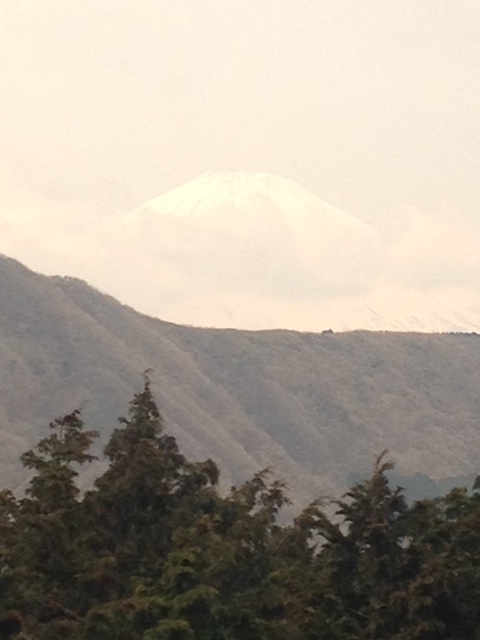
From the capsules (which are quite large) you can get some wonderful views of Mount Fuji. I also have fond memories of the time a cable car coming in the opposite direction was full of sumo rikishi in yukata. Anyway, this is the kind of view you get (and this was on a fairly hazy day):

hakonefuji

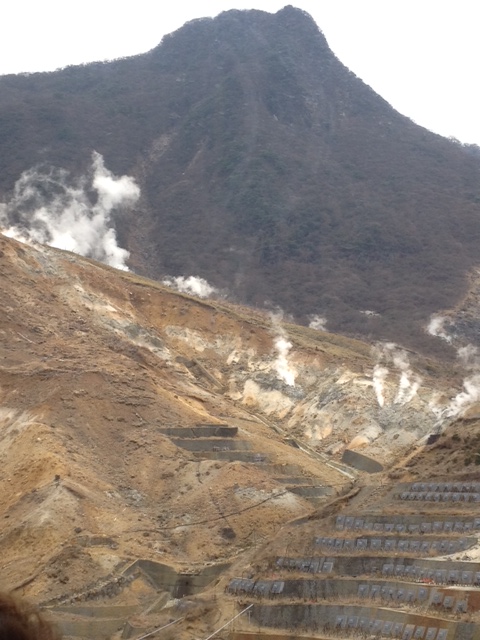
The cable car continues to Owakudani (where you can get out and wander around among sulphurous fumes if the fancy takes you). Otherwise you get on the next leg of the ropeway to Sounzan.

owakudani

Even if you don’t want to wander about you have to get out of the cable car, and walk through the building to the next leg of the journey.

hakoneropeway1

You may see long lines of people waiting to travel in the opposite direction. From here the ropeway goes down the other side of the mountain to Sounzan and on the way you’ll catch your last views of Mount Fuji.

Straight Ahead We Go!

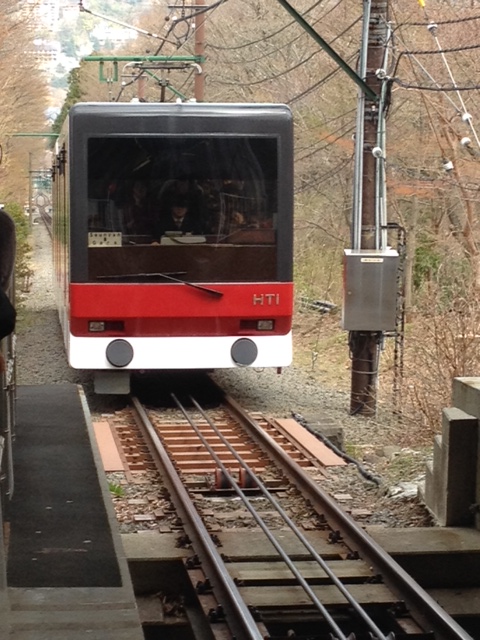
Tired of the ropeway? Wanting a change of transport? Next up is the funicular railway, or, apparently, the cable car.

hakonefunicularWhen it arrives at Sounzan hordes of people disembark from the crowded train; on the way down there is a lot more space, and views of cherry blossoms, hydrangeas, other blossoms or autumn colours, depending on when you go. This is a short trip, and when you get off it is only a few metres from the platform through to the platform for the train which goes all the way down to Hakone-Yumoto.

Down The Mountain We Go!

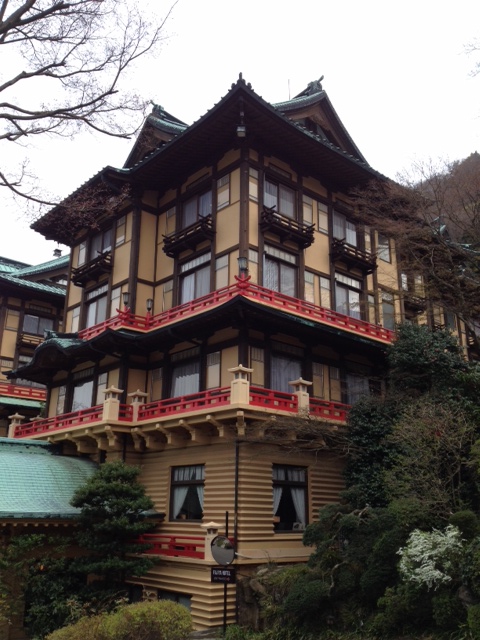
hakonetrainWhile this is the most conventional of all the modes of transport so far, it is still only a small, clanking train, a lot like the Enoden line in Kamakura. From here you can go straight down to the end of the line, but I recommend a stop in Miyanoshita, and a visit to the Fujiya Hotel, built in 1891 and one-time holiday destination of John Lennon and Yoko Ono.

fujiya4                  fujiya2

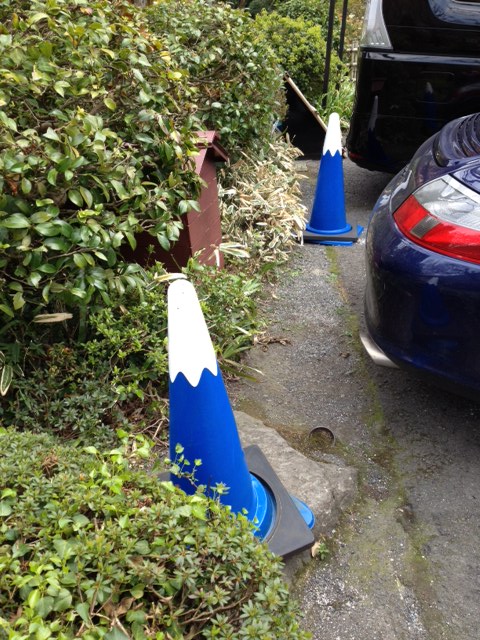
Now, before you go to the Fujiya, I don’t want you to get your hopes up and expect anything too luxurious. I have stayed there and also popped in for afternoon tea, and I would describe it as faded glory. The service and food are all right, but really it’s just a lovely place to break your journey. A piece of history. A nice cup of tea and some cinnamon toast while you look out at the landscaped garden and watch some frozen bride being directed through a succession of photos posed against the foliage. If all that doesn’t tempt you, then maybe the traffic cones will:

fujitrafficcones

From the Fujiya, return to Miyanoshita station and take the train down to Hakone-Yumoto. From there transfer onto the local train and return to Odawara.

hakoneyumototrain

From Odawara it’s easy to take a train back to Tokyo, and you have visited Hakone backwards! The same lovely views, same variety of transport, but without all the waiting in line! Now, wasn’t that worth it?